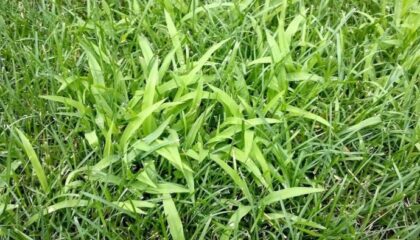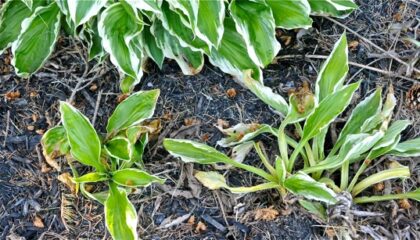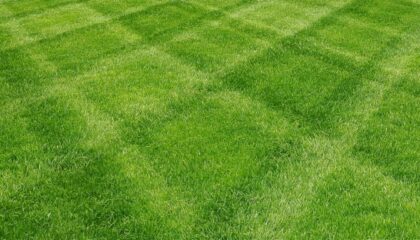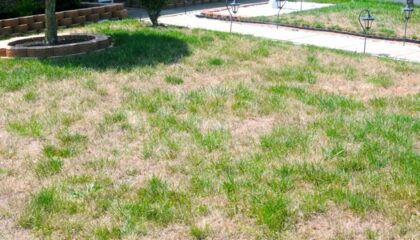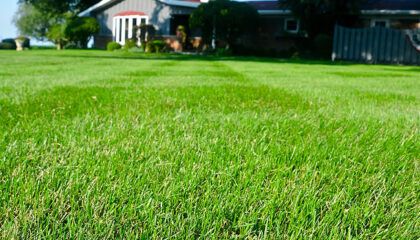
A year ago we wrote about the new varieties of “turf-type fescues” (top photo) that are not only more resilient to hot weather and humidity, they’re virtually weed-free. Compare to conventional bluegrass (bottom photo). Both photos were taken in a yard with no irrigation during the recent local heat wave. For more information, call Ever-Green at 335-6418.

The Cry Is Crabgrass
Without fail, we’re hearing everyday from someone…from one of our clients or a client of another lawn care company…about the rampant growth of crabgrass in their yard over the past two months.
The cry is, “Why do I have crabgrass in my yard, when I treated it (or paid you to treat it) in the spring to prevent crabgrass? Well, read on.
The summer of 2010 has been a particularly tough on lawns. Why? High heat, and extended heat, at that. Plus, after a May and June where we received more than adequate rainfall, there’s been little or no rain in the Miami Valley for the past 45 days.
The lucky ones…those who have in-ground irrigation systems, have fared better because they’re able to control the temperature of their lawns with daytime watering. The evaporative process of daytime watering will actually lower the temperature of those lawns by as much as 8 to 12 degrees over lawns without irrigation.
Here’s another factor to consider. During most summers, nighttime temperatures usually drop into the low 60s or high 50s, giving the grass in your lawn an opportunity to recover from the heat of the day. You may not realize it, and it’s a very important factor. But it has not happened this summer. The average nighttime low since July 4th has been in the low to mid 70s. At 11 pm on one recent evening, the thermometer still registered at 84 degrees!
These hot, dry conditions promote the germination and growth of crabgrass, even if you have treated back in the spring…because the high heat and those frequent June rains have caused your pre-emergent herbicide to wear out earlier than normal.
And, do remember our recent post about post-emergent treatments for crabgrass? It’s going to kill the crabgrass, yes. But it is expensive, and it is stressful to some of the desirable grasses, as well. Better, in most cases, to be patient, don’t let the crabgrass go to seed, and initiate a fall fertilization program (an application by mid-September and another in early November) that will promote growth during the cool, moist days of Fall.
If you’re frustrated, you’re in good company. If you’re frustrated to the point of action to prevent it next year, begin now. For more information, feel free to call the lawn care professionals at
Ever-Green. The advice is free, and what you might not know may be killing your lawn!
|